What is a hidden single in Sudoku?
A hidden single is a digit that can appear in only one cell of a row, column, or box, even if that cell contains other notes.
Sudoku Challenges
Beginner technique
A cell may show several candidates, yet one digit can still be forced when it has no other valid position in the row, column, or box.
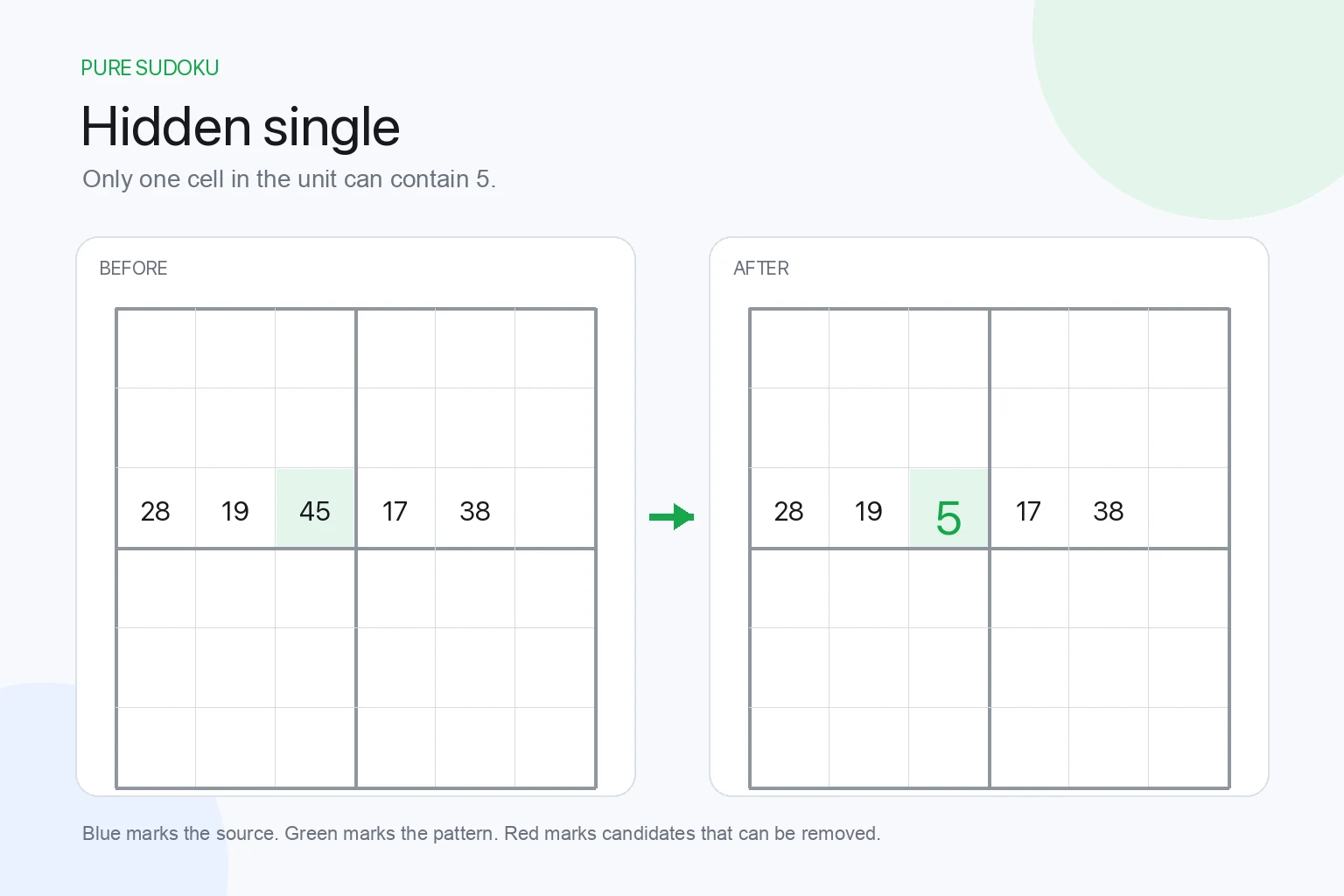
Focused example
The highlighted cells show the exact scope of the pattern. Read the candidates before making an elimination.
How it works
Know the difference
A naked single has one candidate inside its cell. A hidden single may have several notes, but its digit has only one possible position in the whole unit.
After the move, re-scan the affected unit for singles before searching for another advanced pattern.
Common mistake
Do not call a candidate hidden until you have checked every other empty cell in the same row, column, or box.
If any required condition is missing, leave the candidates in place and continue scanning.
Continue playing
FAQ
A hidden single is a digit that can appear in only one cell of a row, column, or box, even if that cell contains other notes.
Scan one missing digit at a time across a full unit instead of reading one cell at a time.
Yes. They are one of the first reliable techniques to learn after the basic Sudoku rules.
Practice loop
Pause when the board slows down, check the candidate conditions, make one justified move, and scan again.