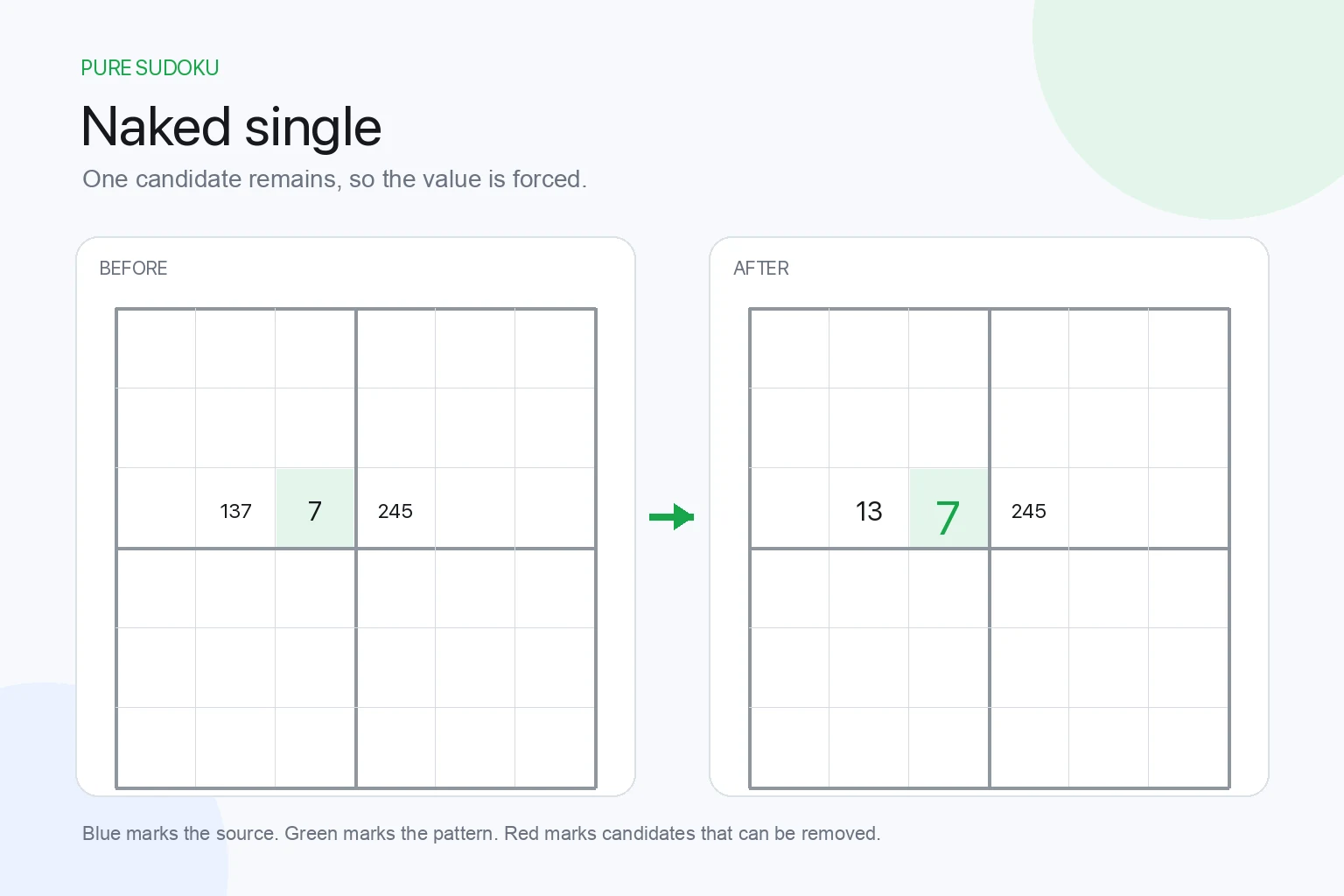
Naked Singles
Place a digit when one cell has only one valid candidate left.
Read the guide →Strategy lab
Learn how to solve Sudoku puzzles faster with proven strategies—perfect for beginners, intermediate solvers, and advanced players chasing expert grids. Each tactic includes simple explanations plus links to practice boards, printable worksheets, and multiplayer challenges. For immediate practice, keep this guide open while you play Sudoku online on a fresh board.
No downloads
Play Sudoku online
Starts directly in your browser with no download required.
Native play
Download the iOS App
A native Sudoku board with haptic controls.
Play in the browser without signing in. An account is optional for saved Daily results and streaks.
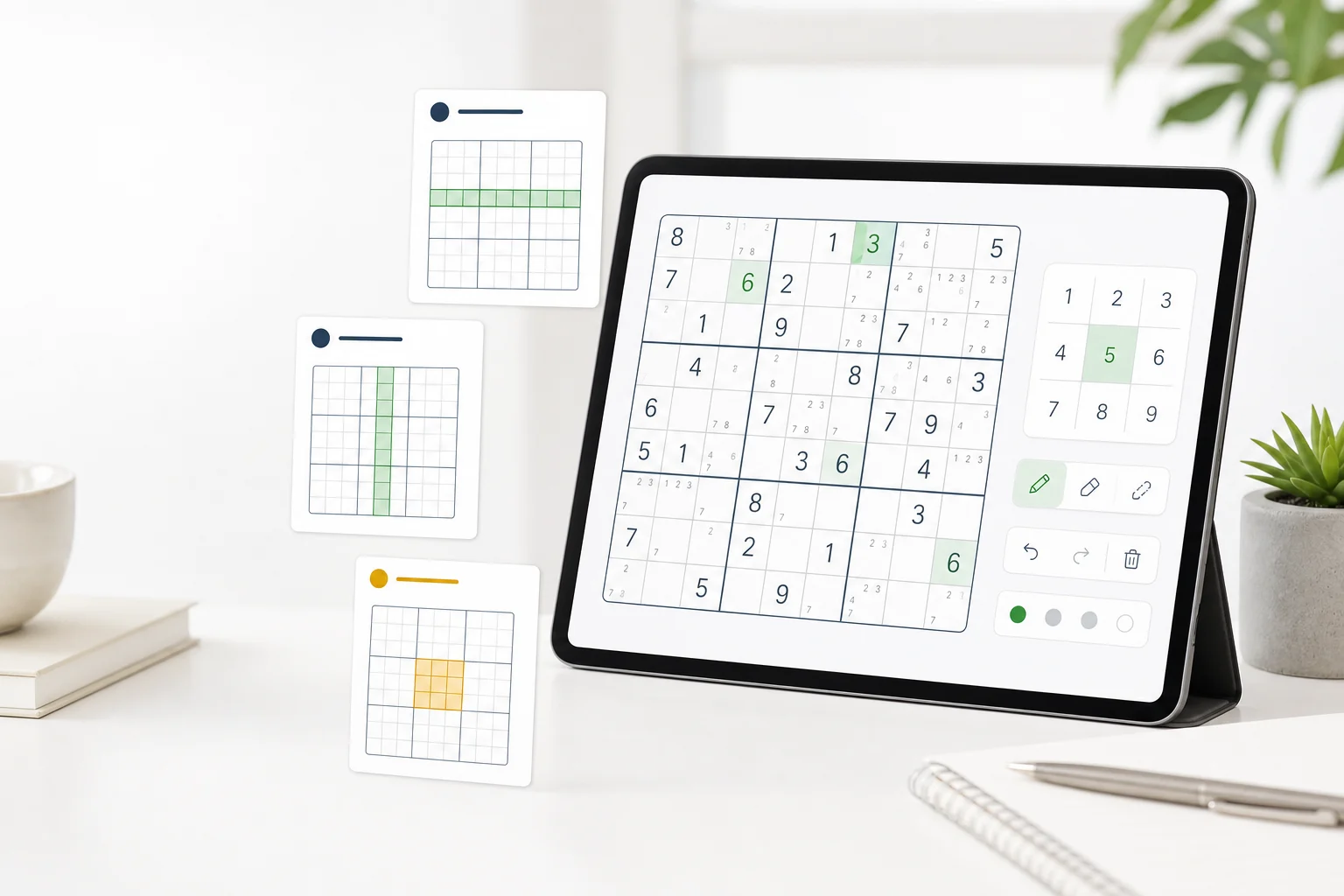
Use these deep-dive guides to master one tactic at a time. Each article includes walkthroughs, printable drills, and direct CTAs back to the Sudoku Challenges game so you can apply the logic right away.
Place a digit when one cell has only one valid candidate left.
Read the guide →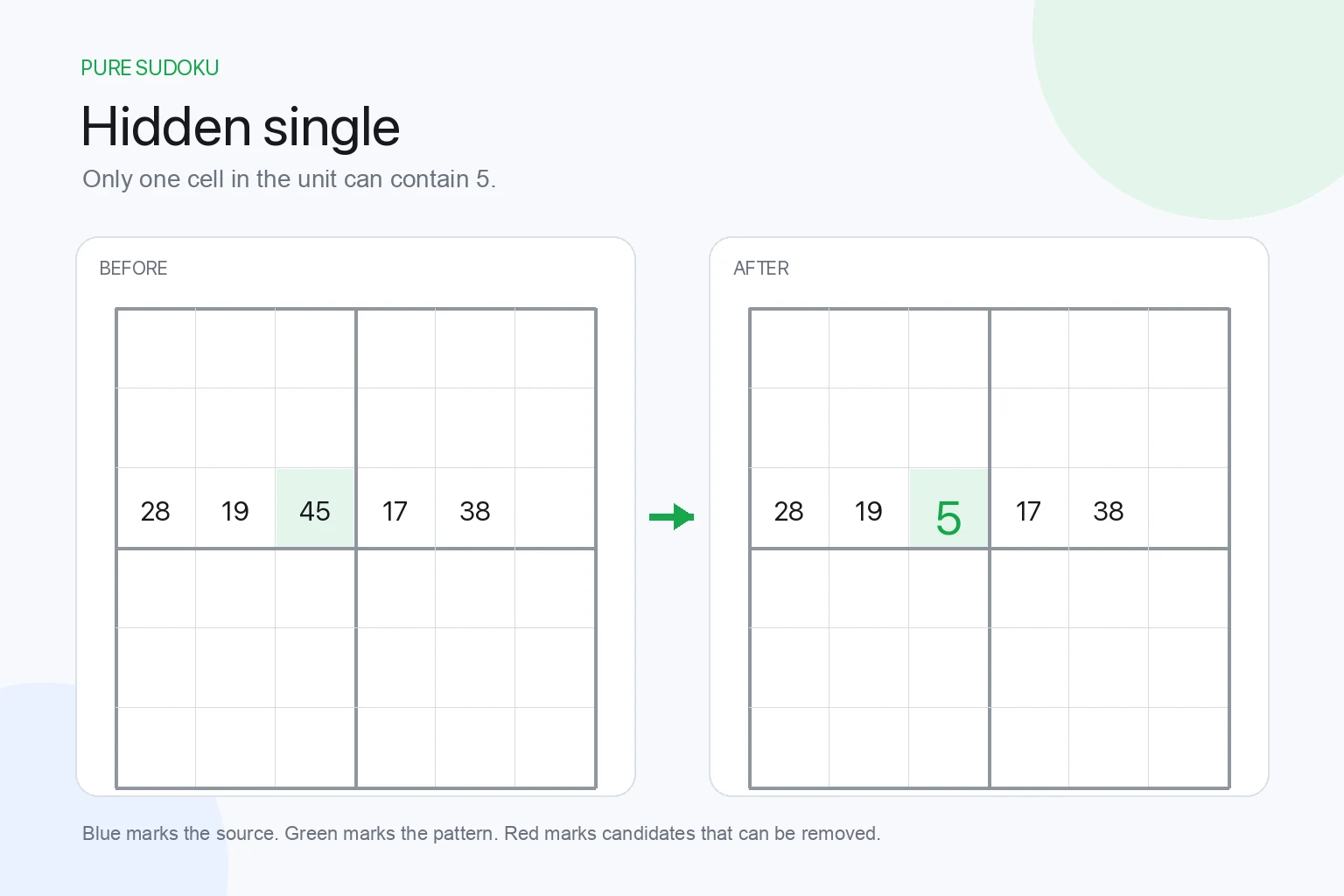
Learn the scan order that exposes hidden singles faster than guessing.
Read the guide →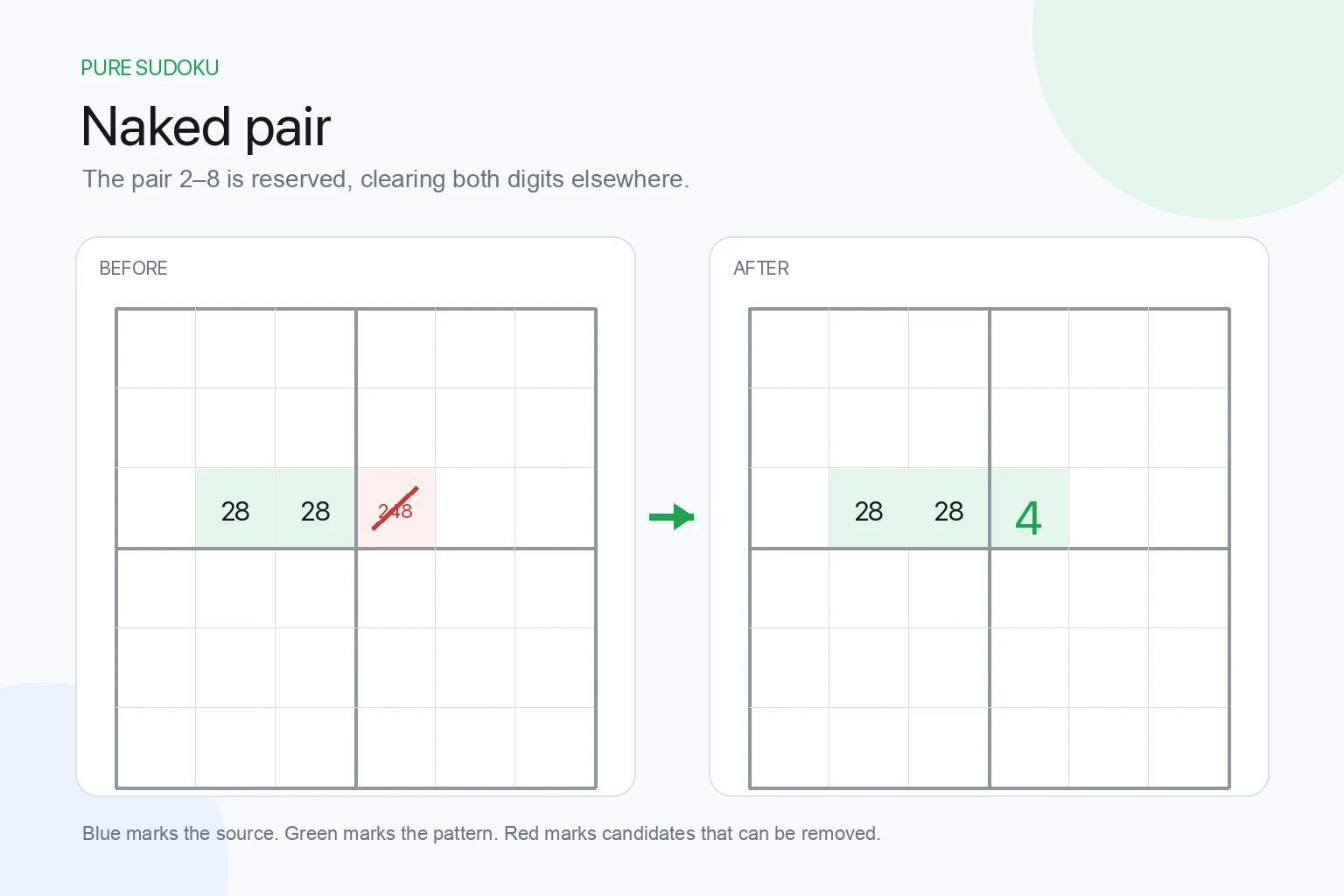
Clear crowded notes by locking matching candidate sets in place.
Read the guide →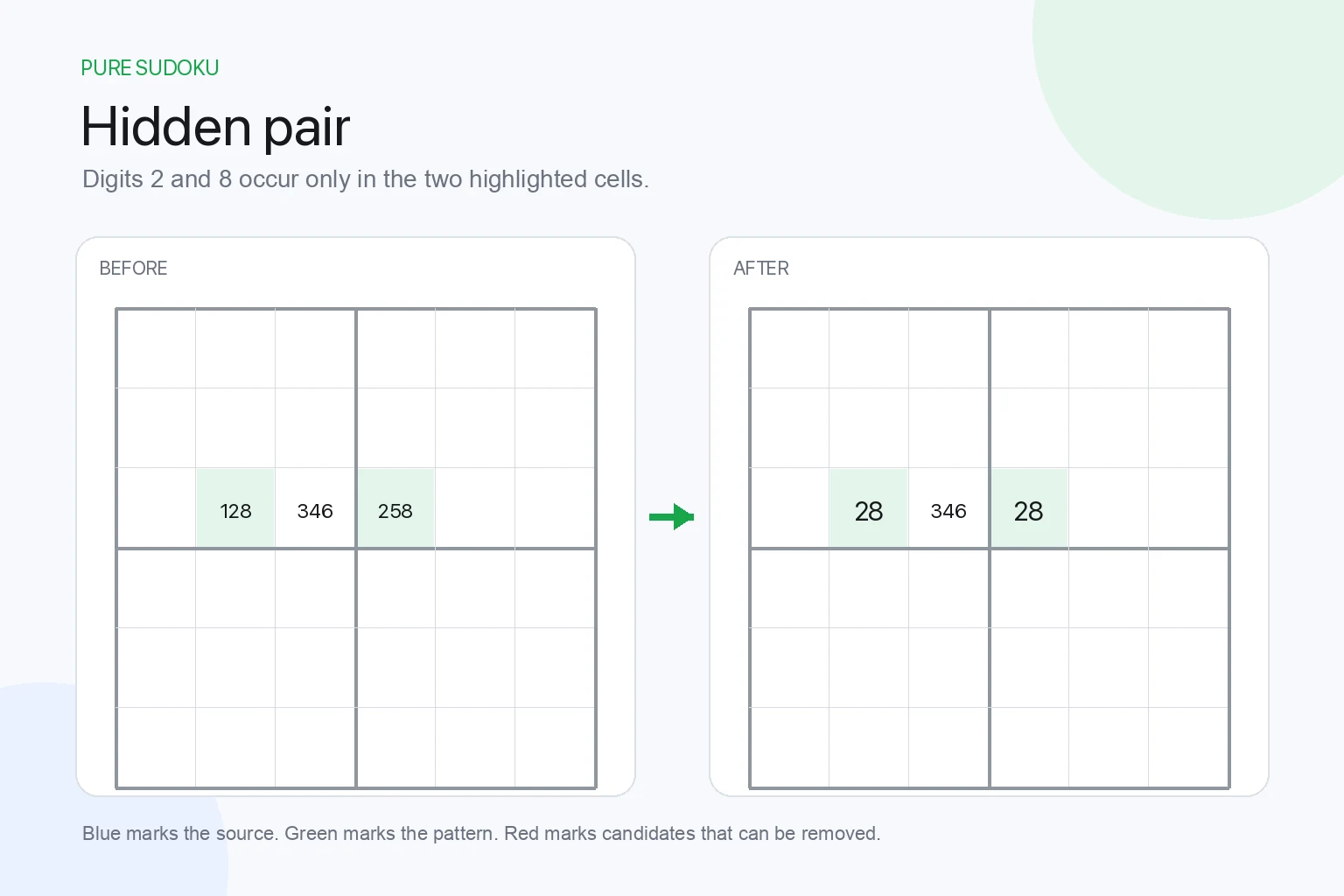
Find two digits restricted to the same two cells and clear their extra notes.
Read the guide →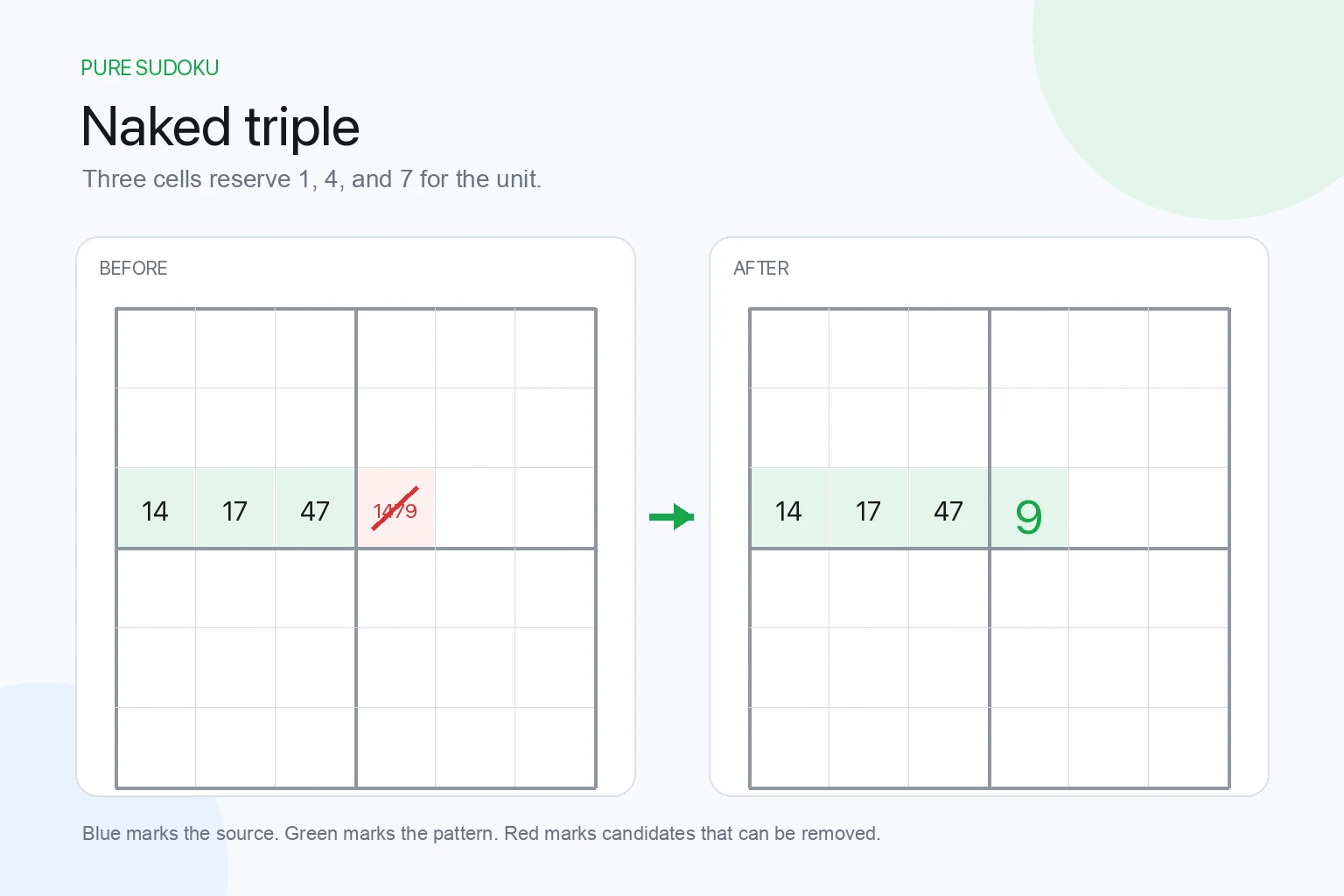
Reserve three candidates across three cells and eliminate them from their peers.
Read the guide →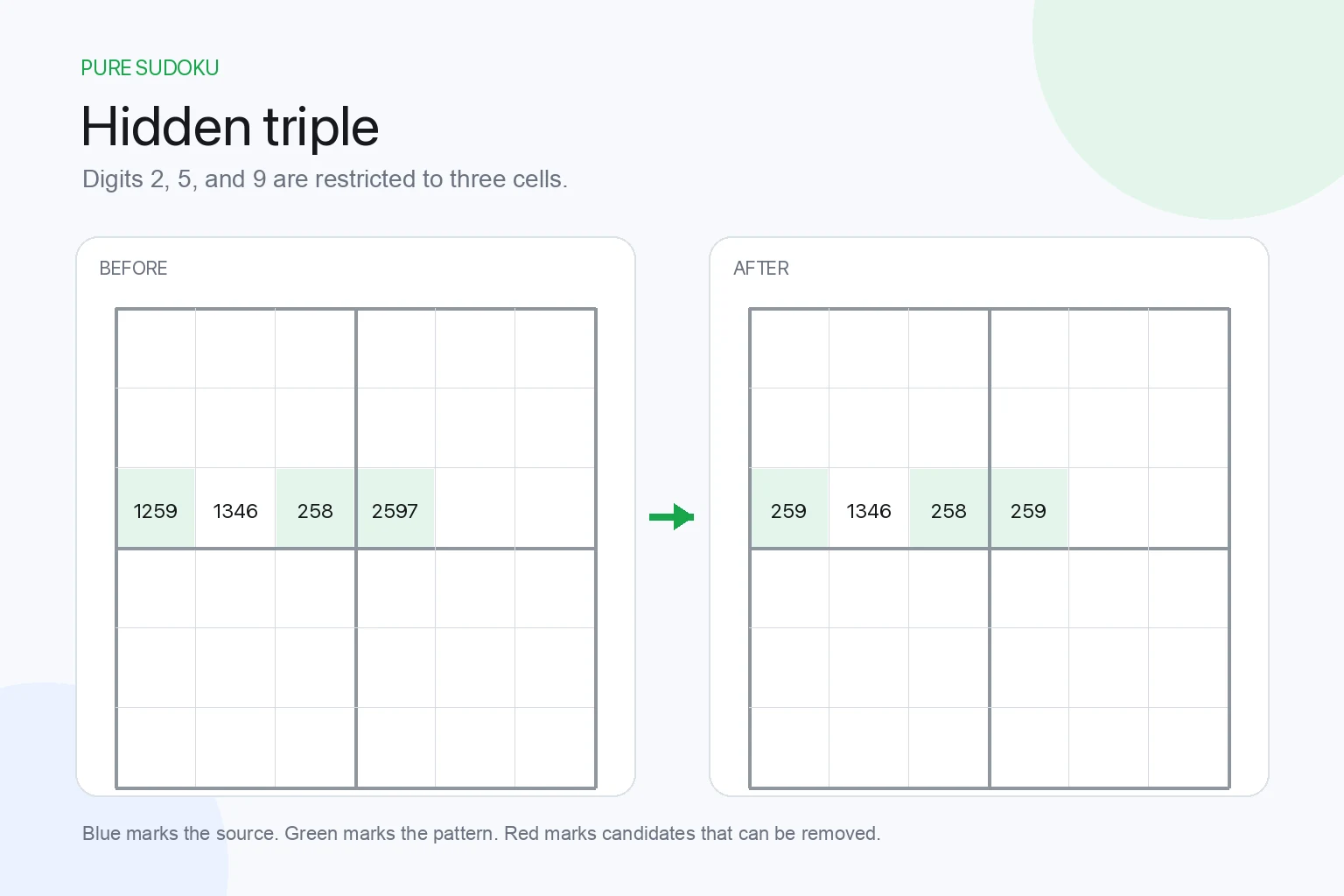
Track three digits limited to three cells, then remove unrelated candidates.
Read the guide →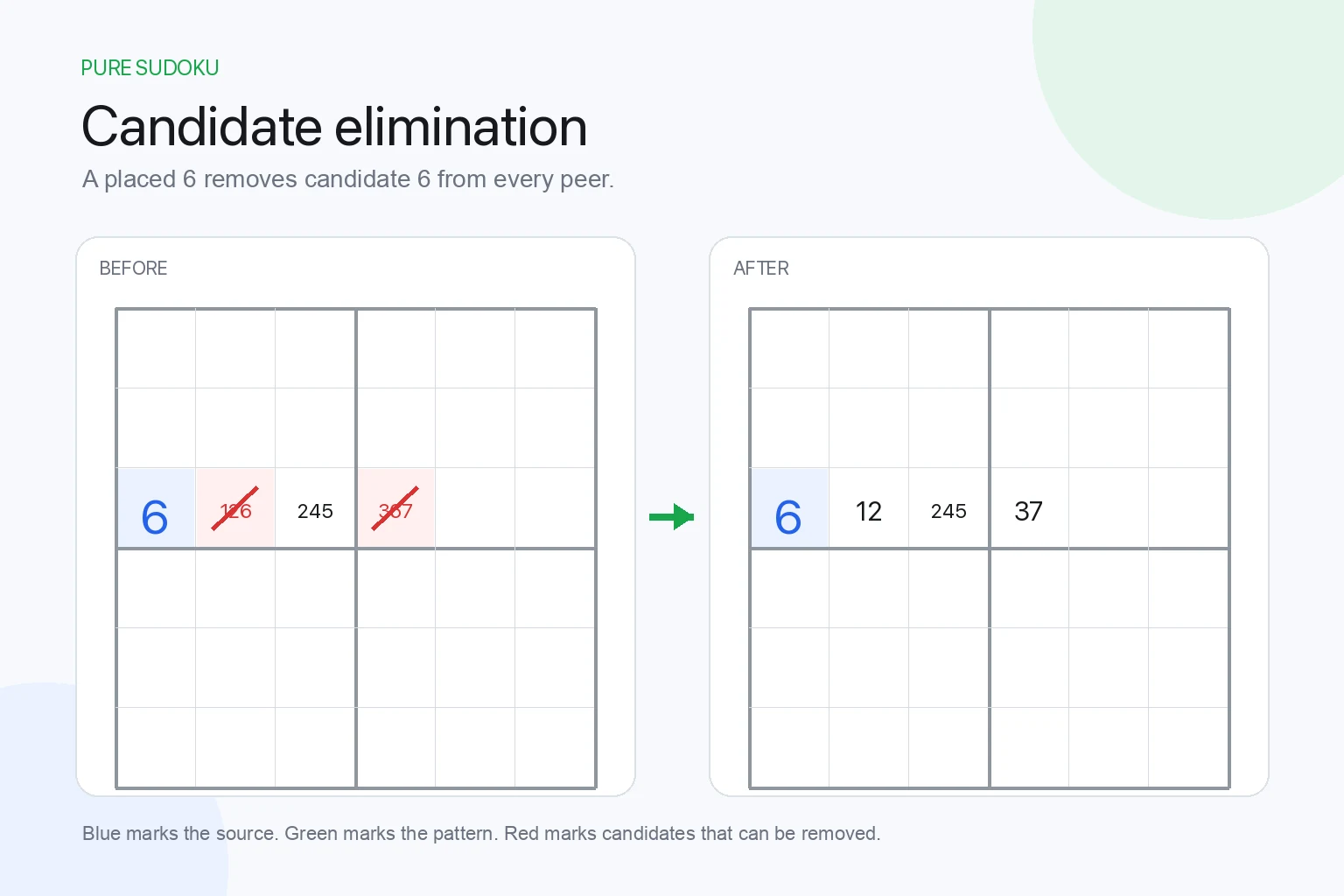
Use peers and proven patterns to remove impossible notes without guessing.
Read the guide →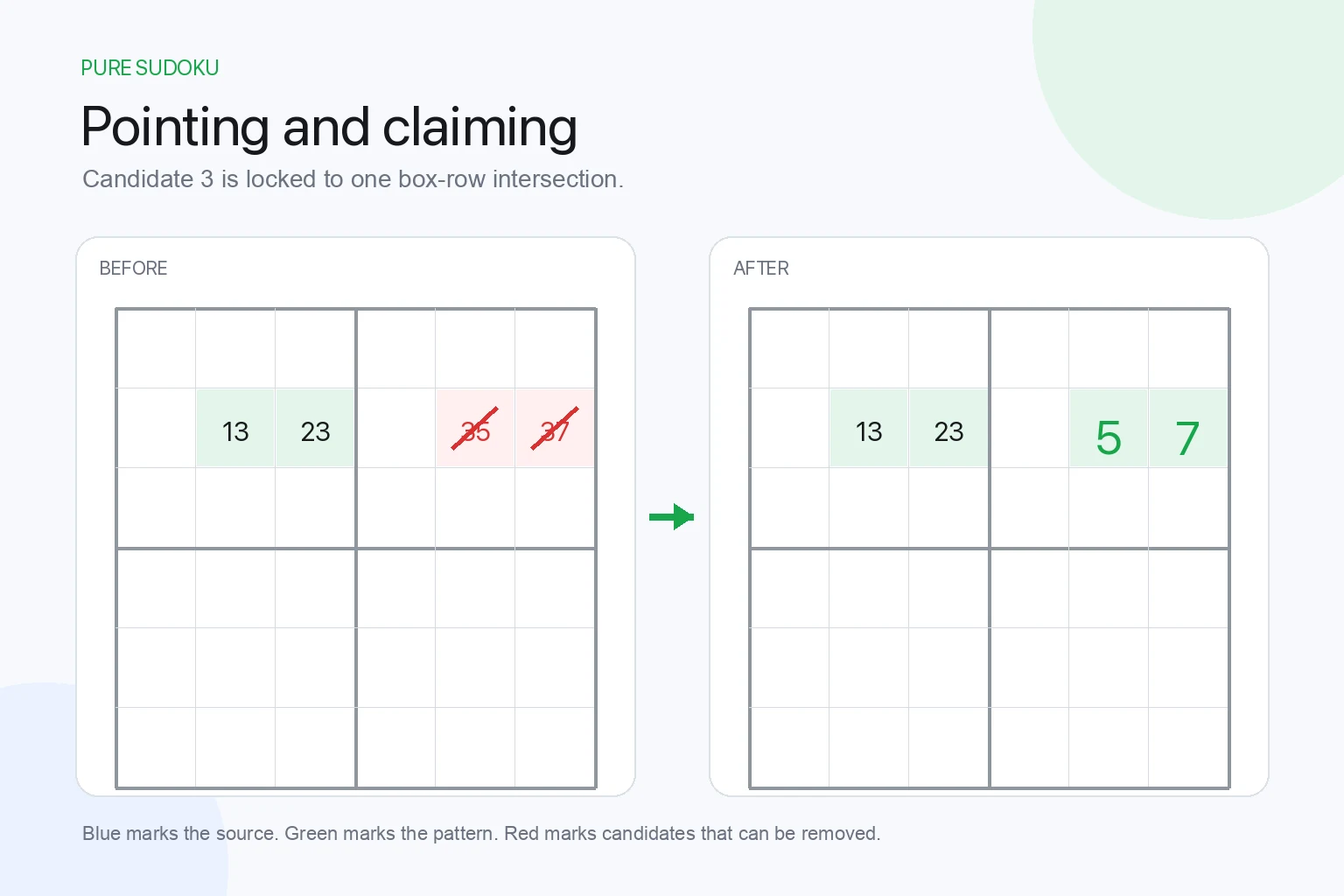
Use box/line reductions to erase entire swaths of candidates in one sweep.
Read the guide →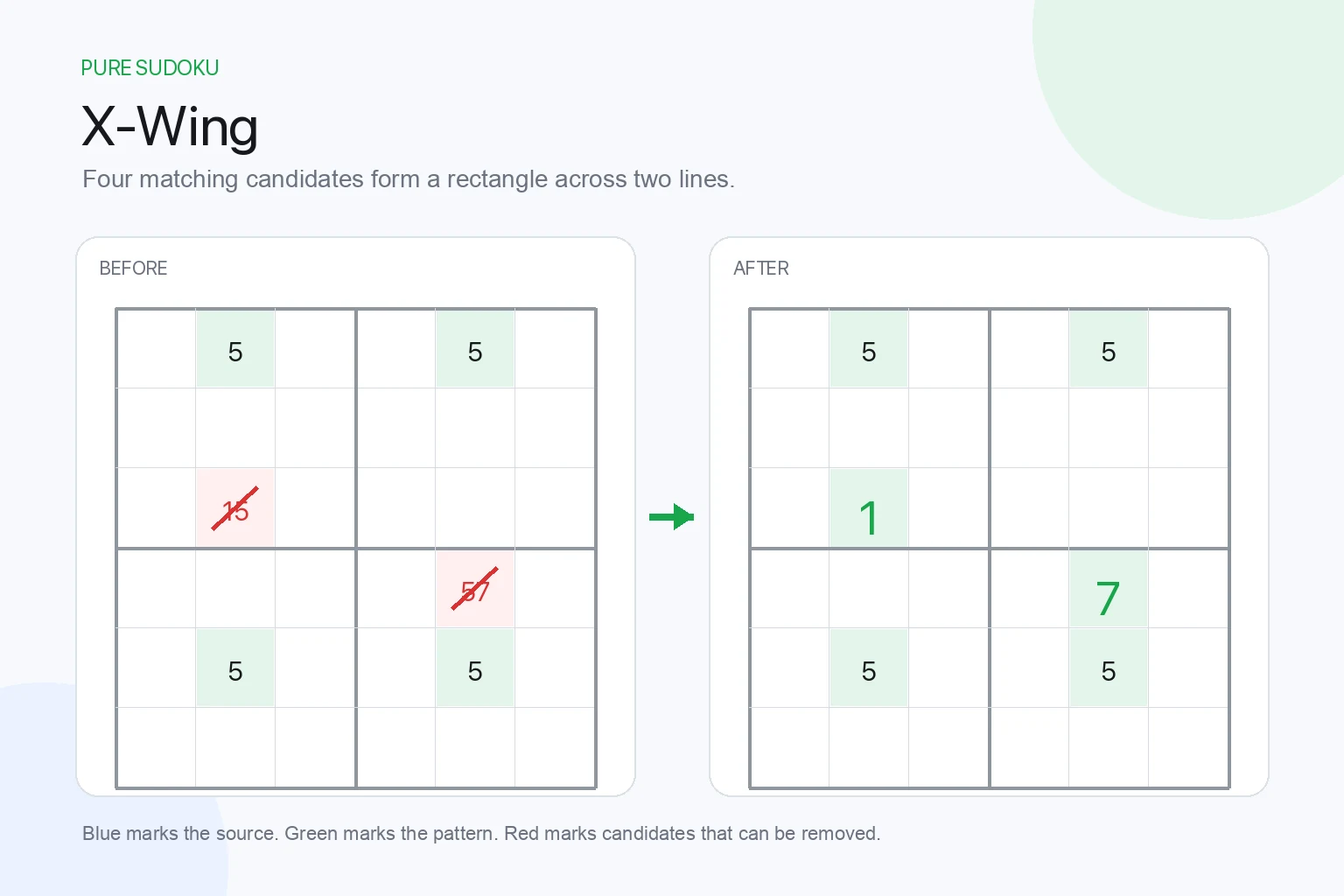
Spot the classic 2×2 wing pattern to eliminate digits from matching columns or rows.
Read the guide →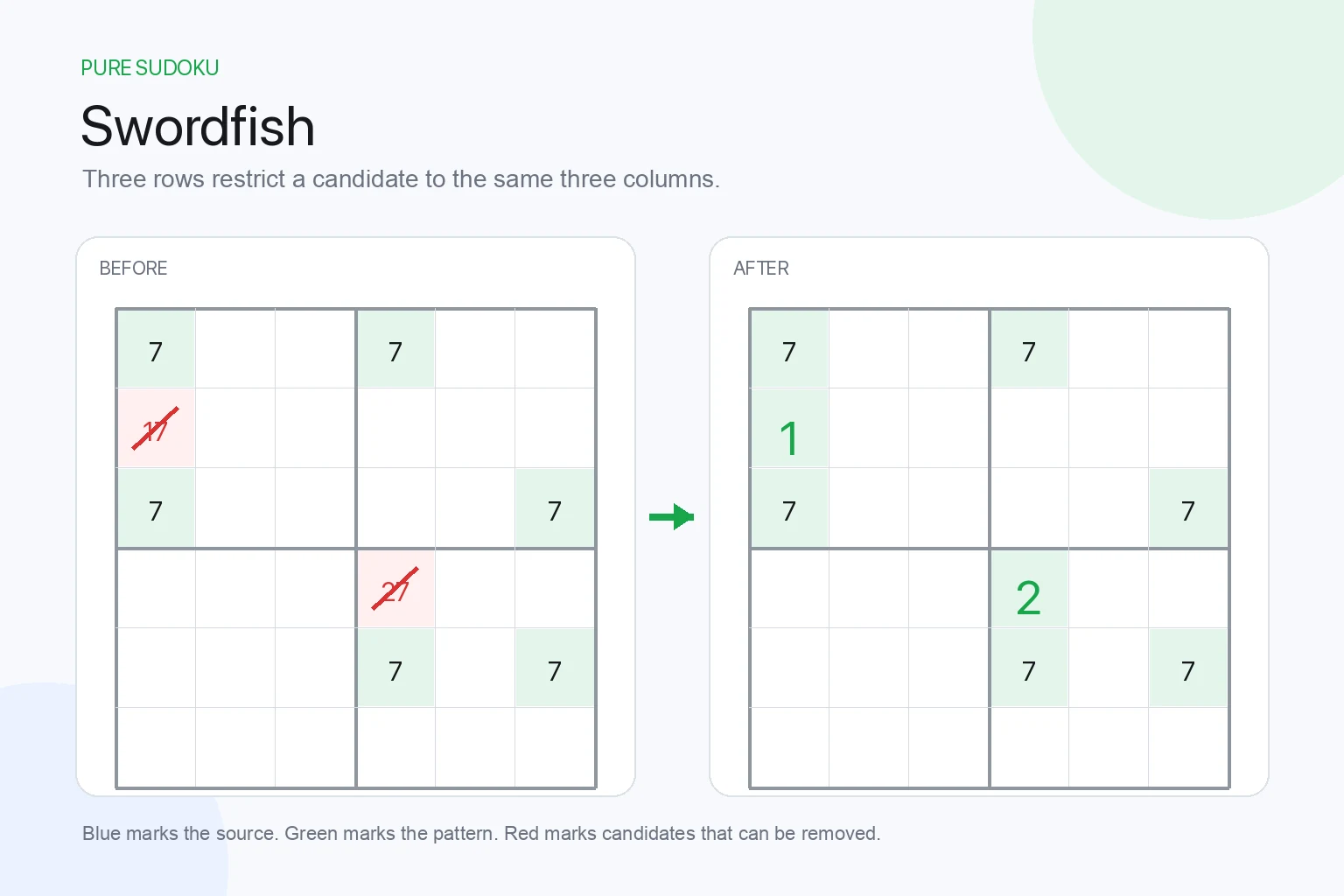
Graduate to three-line fish patterns for diabolical puzzles.
Read the guide →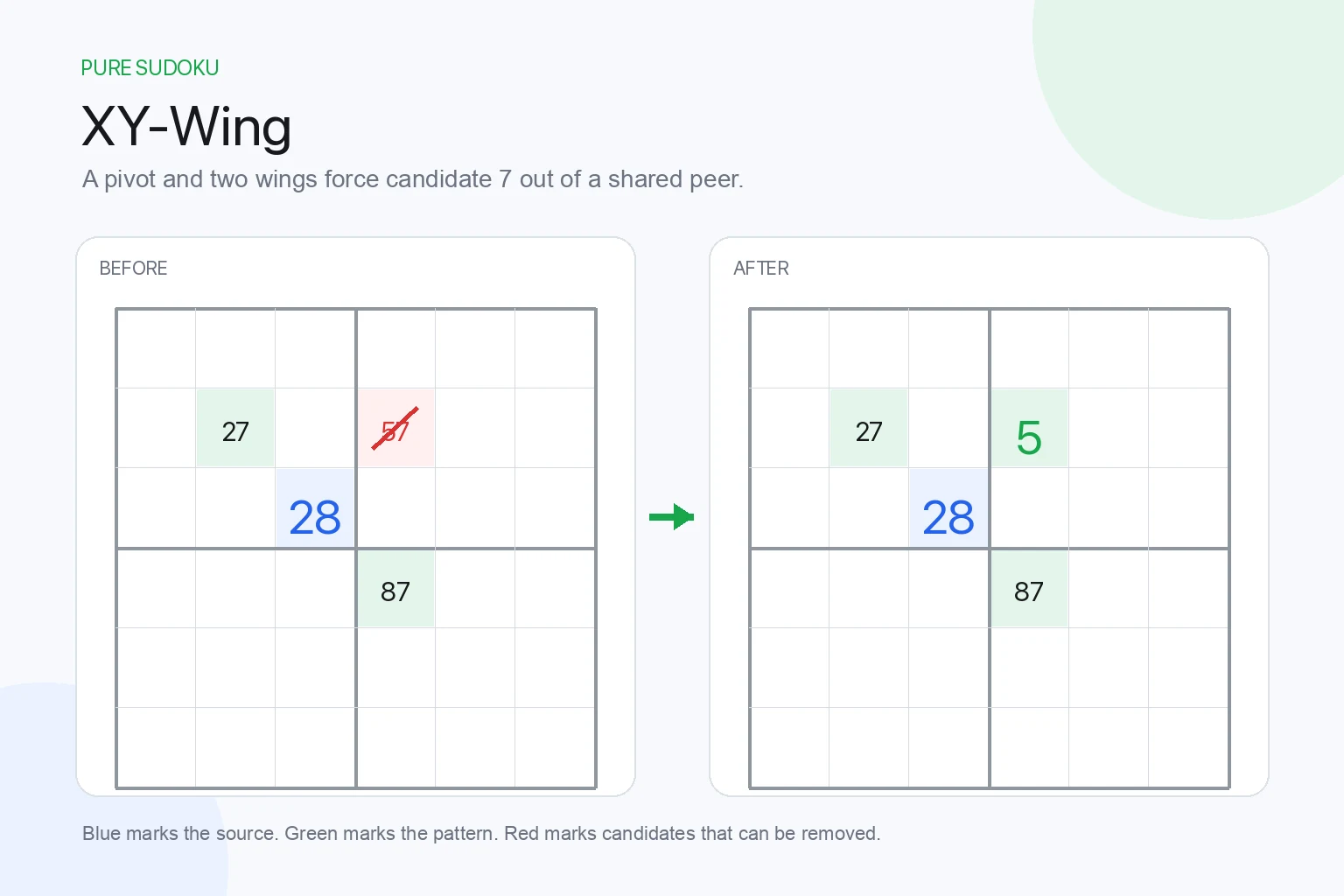
Turn one pivot cell into multiple eliminations using chained bi-value cells.
Read the guide →Instant practice
Move from a worked example to a live Sudoku Challenges board. Choose a difficulty, add pencil marks, and use undo or a hint when you need to inspect a deduction from another angle.
Great solving habits prevent mistakes later. Begin each puzzle—especially on easy Sudoku boards—with these basics:
Another beginner-friendly option is crosshatching. Look at one number at a time (for example, all of the 5s) and cross out rows and columns the number already occupies. Any remaining empty cell in the affected box is the only place the number can belong. This deliberate approach trains your eyes to spot hidden singles without missing obvious placements.
Finally, set a solid rhythm: scan rows, scan columns, check boxes, then update notes. When you follow the same loop every puzzle, Sudoku strategy becomes muscle memory and errors stay low.
When singles run dry, use these Sudoku strategy staples to keep the grid moving. They appear often on medium puzzles and create a bridge to advanced solving.
If two cells in a unit share the same two candidates, those numbers must belong there. Remove them from the rest of the unit. Apply the same logic to triples and quads whenever you spot repeating candidate sets.
Sometimes a candidate only appears twice within a unit, but the cells contain extra notes. Lock those values in place and erase the other candidates from those cells.
If a candidate is limited to one row or column inside a box, eliminate it from that row or column elsewhere (pointing pair). Conversely, when a row or column confines a candidate to one box, remove it from the rest of the box (claiming).
After you place a few pairs, look for candidate lines. If the candidate 7 can only exist in row 4 of box 6, remove every other 7 from row 4. The reverse works too: if row 4 restricts candidate 7 to box 6, delete it from the rest of the box. This “box/line reduction” technique can unlock several singles in a chain reaction.
Coloring is often considered advanced, but a simple two-color system can help intermediate solvers. Pick a candidate that appears twice in a unit, color one blue and the other green, and propagate the colors wherever that candidate is constrained. If you ever see a contradiction—two blue cells in the same unit—eliminate all blue candidates. This soft introduction to chains prepares you for harder tactics later.
Need real-time reps? Tackle a daily Sudoku challenge focused on spotting pairs and pointing moves.
Hard and expert puzzles demand more sophisticated logic. Add these tactics to your toolbox to solve diabolical grids without guessing.
Track rows (or columns) where a candidate appears exactly twice. If the positions line up to form a rectangle, you can remove that candidate from other cells in the corresponding columns or rows—this is the classic X-Wing. Expand to three lines to form a Swordfish and clear even more candidates.
These wing patterns hinge on a pivot cell with two or three candidates. When the pivot links to two cells that share a candidate, any other cell that sees both wing cells cannot contain that shared value.
Beyond Swordfish you will encounter Jellyfish (four-line fish) and Finned Fish, where an extra candidate (the fin) must be considered. If the fin is forced out, treat the pattern like a normal fish and eliminate candidates accordingly. These rarely appear in easy puzzles but are common in competition-grade grids.
An Almost Locked Set contains N+1 candidates in N cells. When another candidate interacts with the ALS in exactly two places, you can eliminate that candidate from every cell that sees both. ALS strategies require patience but can dismantle puzzles that resist other advanced tactics.
Use coloring to mark alternating candidates (true/false assumptions) across the grid. If two same-colored cells end up in the same row, column, or box, you have a contradiction and can eliminate that color entirely. Extend the idea with alternating inference chains (AICs) where you alternate between strong and weak links; when a chain loops back on itself, you either place a value or eliminate a candidate.
Test these high-level tactics against the hard Sudoku archive or in a live multiplayer Sudoku match for extra pressure.
Even seasoned solvers stumble. Keep these pitfalls in mind to maintain accuracy during long solving sessions:
Build lasting skill with a structured schedule. Mix online play, printables, and strategy review to reinforce every technique. Adjust the days to fit your calendar, but aim for consistency.
| Day | Focus | Assignment |
|---|---|---|
| Days 1–5 | Fundamentals | Solve one easy Sudoku puzzle daily and track every naked or hidden single you use. |
| Days 6–10 | Pairs & Pointing | Use the daily Sudoku calendar to identify three pairs or pointing moves per puzzle. |
| Days 11–15 | Intermediate Mix | Print a set of Sudoku worksheets. Highlight every candidate elimination you make. |
| Days 16–20 | Advanced Patterns | Tackle two hard puzzles and log each X-Wing, Swordfish, or wing you apply. |
| Days 21–25 | Chains & Coloring | Practice short alternating inference chains. If you get stuck, review notes or watch walkthroughs. |
| Days 26–30 | Speed & Pressure | Join a multiplayer Sudoku race or time yourself on expert puzzles. |
Deliberate practice cements each Sudoku solving strategy. Try these drills to reinforce new ideas:
Every removed candidate follows from a row, column, box, or named pattern—not from likelihood or guessing.
A useful technique reduces candidate noise and often reveals a new single, pair, or box-line interaction.
After the move, every placed digit still satisfies its row, column, and 3×3 box.
Read a focused technique guide, inspect a grid with the solver, then apply the idea on a fresh board.
Use the Daily Challenge for a recurring puzzle, or open Race and Together modes to share a board.
The iPhone app offers a native board and haptic controls for players who prefer practicing away from the browser.
Start with scanning, naked singles, and hidden singles. These solve many easy puzzles and make the rest of the candidate grid cleaner before you move into pairs or advanced patterns.
Use pencil marks after obvious singles slow down. Update them after every placement so outdated candidates do not hide pairs, pointing moves, or X-Wing patterns.
Hard puzzles usually need candidate eliminations such as naked pairs, hidden pairs, pointing and claiming, X-Wing, Swordfish, XY-Wing, coloring, or chains.
Yes. Open Sudoku Challenges, choose a difficulty, turn on notes, and practice one strategy at a time on a real browser board.
Blend these Sudoku tips with consistent play. Use notes on the web board, print worksheets for classroom or paper practice, and return to the Daily Challenge for a fresh puzzle. The more varied your practice, the more natural advanced solving becomes.
Explore these tools and community ideas to keep improving:
With a steady routine, these Sudoku solving strategies evolve from theory to instinct, helping you crack any puzzle that appears in your queue.
Jump straight into fresh boards or supporting tools to reinforce every technique you just learned.